The G2 Checkpoint: Strategic Opportunity for WEE1 Inhibition
An analysis of Synthetic Lethality beyond PARP. Mapping the WEE1 kinase's role in DNA Damage Response (DDR), the mitigation of 'off-target' hematological toxicity, and the valuation of Zentalis vs. Biomea.
01_THE_FUNDAMENTAL_THESIS: EXPLOITING_GENOMIC_INSTABILITY
Cancer cells are defined by their chaotic replication. To survive their own mutations, they rely heavily on “checkpoints” to repair DNA before dividing. The WEE1 kinase is the final gatekeeper of the G2/M checkpoint. By inhibiting WEE1, we force cancer cells to enter mitosis (division) with catastrophic DNA damage, leading to mitotic catastrophe and cell death.
The Anarch Alpha: The market has a “trauma response” to WEE1 due to the early toxicity profiles of first-gen candidates (like AstraZeneca’s adavosertib). However, the “Value Leap” is found in the next-generation, CNS-penetrant, and selective inhibitors that decouple efficacy from systemic toxicity. We are looking for the “Synthetic Lethality” play that can mirror the success of PARP inhibitors.
02_THE_MECHANICS: SYNTHETIC_LETHALITY
WEE1 inhibition is most potent in tumors with p53 mutations (the most common mutation in cancer). Since p53-deficient cells already lack the G1 checkpoint, they are entirely dependent on the WEE1-regulated G2 checkpoint.
Removing WEE1 in a p53-mutant cell is like removing the emergency brakes on a car that already has no regular brakes. The result is a total system failure.
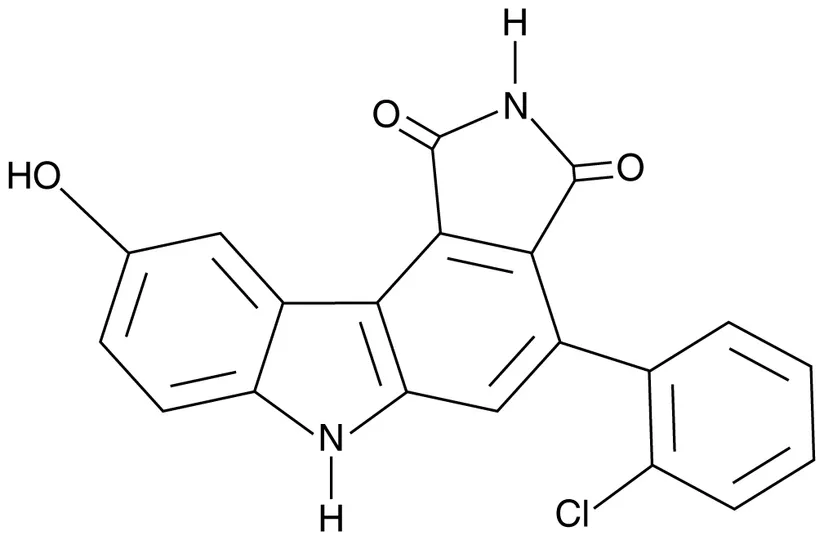
03_ASSET_DILIGENCE: ZENTALIS PHARMACEUTICALS (ZN-c3 / Azenosertib)
Zentalis is the current “Pure Play” benchmark for the sector. Their lead, azenosertib, is designed specifically to overcome the PK/PD limitations of earlier inhibitors.
The Value Driver:
- Selectivity: High selectivity for WEE1 over other kinases (like PLK1) reduces the “dirty drug” profile that caused neutropenia in older trials.
- Combination Strategy: Zentalis is aggressively testing azenosertib in combination with chemotherapy and PARP inhibitors.
- Model Output: We solve for value in Platinum-Resistant Ovarian Cancer (PROC) and Uterine Serous Carcinoma (USC). These are high-need indications where a positive P2 readout resets the rNPV from a “speculative” $4.00 base to an “M&A target” $18.00+.
04_ASSET_DILIGENCE: BIOMEA FUSION (BMEA)
While often associated with their covalent Menin inhibitors, Biomea’s platform explores the intersection of covalent bonding and DDR.
The Covalent Moat:
- Irreversible Binding: If a WEE1 inhibitor can bind covalently, the duration of the “G2 Blockade” is extended regardless of the drug’s half-life in the blood.
- Logistics: This potentially allows for lower, less frequent dosing, which is the primary solve for the “Toxicity Wall” that the sector has hit previously.
05_THE_ENVIRONMENT: SYROS (SYRE) & ASTRAZENECA (AZN)
- Syros (SYRE): Evaluating WEE1 in the context of Cyclin D1 overexpressing tumors. This adds a layer of biomarker-driven “Precision” to the valuation. If the biomarker (Cyclin D1) can predict responders, the PoS (Probability of Success) in the model jumps from a standard 15% to ~35%.
- AstraZeneca (AZN): The incumbent. Despite adavosertib’s hurdles, AZN’s continued interest in the space validates the target. Their data serves as the “Baseline” against which small-caps (ZN-c3) must demonstrate superior safety.
06_FINANCIAL_ARCHITECTURE: THE TOXICITY_CAP
In WEE1 modeling, the “Revenue Ceiling” is determined by the Dosing Schedule.
- Intermittent Dosing: Most successful models now use a “5-days-on, 2-days-off” or “3-weeks-on, 1-week-off” schedule.
- Clinical Diligence: We track the Grade 3/4 Neutropenia rates across all active NCT trials. If a candidate stays below a 25% G3/4 rate while maintaining a >30% Objective Response Rate (ORR), they are an immediate M&A candidate.
07_VALUATION_GRID: DDR_LANDSCAPE_COMPARISON
| Candidate | Ticker | Phase | Target Indication | Primary Catalyst |
|---|---|---|---|---|
| Azenosertib | ZNTL | Phase 2 | Ovarian / Solid Tumors | P2 Topline 2025 |
| BMEA-536 | BMEA | Pre-clinical | Solid Tumors | IND Filing |
| Adavosertib | AZN | Phase 2 | Combination Study | Combo-data Readouts |
| Debio 0123 | Private | Phase 1 | Glioblastoma | CNS Penetration Data |
08_THE_BINARY_EVENT: THE “CHECKPOINT_COLLAPSE”
The next 12 months for WEE1 are binary.
- The Safety Clear: If Zentalis can prove that azenosertib avoids the cumulative bone marrow toxicity of its predecessors, the “Platform Value” re-rates.
- The Combo Win: WEE1 + PARP is the “Holy Grail.” PARP creates DNA nicks; WEE1 prevents their repair. Together, they create a “Synthetic Lethality Loop.”